

Elena woke to the city’s pale dawn drumming against the gentle rattle of apartment windowpanes. This rhythm had grown on her. Her hand searched in the bed beside her. That side of the bed was empty. Her man who had been her sunlit promise had left the bed. Marco’s side of the room carried the faint heat of his body. An invisible imprint of the life they had begun in a whirlwind of champagne and laughter. She pressed her palm to the spread, felt the cooling warmth of his presence. She rose slowly, sleepily thinking of the blueprints on her desk, still reeling from the fingerprints left on her heart.
The two had met through friends at a charity gala. That night felt like a carousel of glamour, music and promise. Elena, an architect who rarely found time to socialize, looked round the room with room for wonder. Marco was a man who wore charm like a tailored suit. He spoke of insurance, numbers, and risk. His smile and confident masculine voice brought smiles to everyone he met. He called himself an insurance man, a guardian of valuables, a protector of legacies.
This was his world and I, Elena, the elegant and rising young female architect had stepped into his domain. The whirlwind romance was more than a spark. It was like a fuse: quick, bright, and with a heat that dulled my careful, independent mind. It made me feel almost reckless. The days and nights together made my friends question his intent. I brushed off their concerns. I believed he wanted to spend as much time together as possible. On occasion, Marco came across as a tad too possessive, especially when another man paid me a compliment.
Within months, Marco suggested we get married. I laughed it off, thinking he just wanted to make sure I would choose only him. I only met a few of his friends. He dominated our conversations any time we had company. He regaled us with tales of his new business acquisitions. He also talked about his investments and bonuses. We had great plans to travel around the country. We also wanted to travel across the continent. We were both very busy at work. A few projects later, I bought my first car and Marco was so impressed. He had a great big Japanese car. He looked at my small get-me-around. Marco offered me his car whenever I wanted it. His charm and consideration were so attractive, winning me over. Marco was a gentleman, preferring to eat at home over what he termed as unfairly priced restaurant meals. I thought that was odd but dismissed it. I thought we would make two cute home-bodies. We would enjoy our space and time together.
The fairy-tale wedding came with the hush of a thousand perfumed petals. A chorus of well-wishers believed they were witnessing the birth of a “forever marriage.” I wore a dress draped in crystals. The crystals seemed to gather light with every move. Marco wore a smile. His smile seemed to say, I have got you. His suit was a dull gray but still smart. People whispered about how my petite form was shadowed by the charming tall guy. There were whispers among our guests about how my steadiness tempered Marco’s mercurial charm. For once, a man who spoke in confident futures had found a woman who spoke to his heart and mind. The reality, though, was quieter and more dangerous. My intuition was sharp as a drafting compass. It felt a thread tugging at the hem of my happiness before the end of our wedding day. I tugged back with a stronger belief in love’s ability to outshine fear.
The first few months of marriage felt like an artful balance between two lives learning to share a space. I noticed Marco’s late nights as consistently as the tide coming in. A car idled outside the front door until the streetlights blinked past midnight. A burner phone lived in the pocket of a suit he never wore to the office. A web of names arrived in his messages and vanished before my morning coffee cooled. He gave explanations with a smile. He was a compassionate liar who spoke in metaphors about “protecting what matters” and “handling delicate things with care.” I let him tell me he traveled for “policy audits” and “risk assessments.” This language was convincingly plausible. It sounded logical.
Then came the night my assumptions began to crumble. A museum gala. A painting shimmered under chandeliers. There was a string of whispers about a renowned jewel thief who worked under the banner of “insurance” and “protection.” I was not sure what to expect when I finally faced the truth. It was so disconcertingly ordinary in its revelation. Marco returned late from a “brief trip to verify coverage.” There was a new bruise on the back of his left hand. I also noticed a dented pride in his eyes. I pressed him about a conversation he’d had with a “client” who spoke of a certain “Blue Mirage” necklace. No one else in the room named it with certainty. He tensed up and changed the topic twice. This peaked my curiosity but added to the heavy dread in the pit of my stomach.
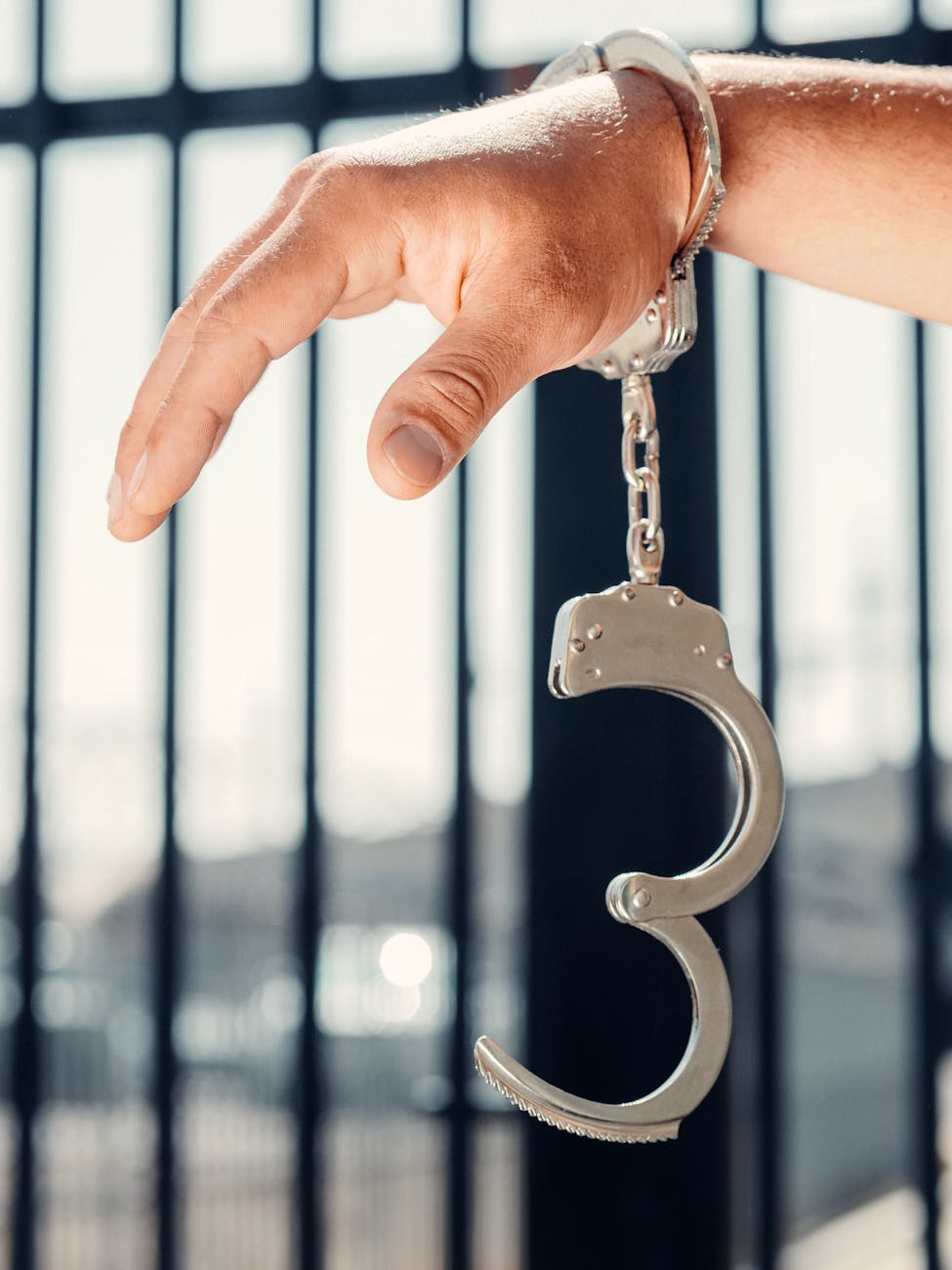
Then came the night of the heist. It was a dream of sirens and the metallic scent of handcuffs. Alarms rang in our apartment, jolting me from a deep sleep. The noise awakened the whole apartment block. The museum’s prized piece—the Blue Mirage necklace—was a jewel that had hung in full view. It disappeared and reappeared in our home safe. I shook off the dream, heavy with sleep and sat up in bed. As usual, Marco had left our bed at some unknown hour. As I stumbled to the bathroom, I walked past our open and now empty closets. I went to the bathroom. As I washed my hands, the thought of empty clothes closets began to bother me. Marco had mysteriously and quietly into the night. I realized this, as the sirens grew louder, followed by loud banging on our front door. I dressed in a hurry and opened it. Two Police officers stood there. They quickly identified themselves. They asked if they would like to come in.
The investigation unfolded with the gravity of a verdict. The evidence pointed toward someone who lived in Marco’s orbit. There was a pattern of late-night purchases. Recurring travel aligned with a string of unrelated airfares. A single camera frame caught a silhouette too much like his to ignore. I stood at the edge of the crime scene. My breath was held as the room rotated with the soft tremor of the reality of what happened. When the police spoke with Marco the night after, his voice sounded anxious. It was as if he was running from a crime. He was also escaping from a life that would not contain his lies any longer. I lay awake listening out for his footsteps in the hallway, but the silence continued into every morning thereafter.
The morning after, I faced the truth with a careful, stubborn refusal to accept a compromised blueprint. The evidence—a thread of Marco’s past that wouldn’t align with the life they’d promised—tugged at my heart. The detective assigned to their case was Inspector Purity. She was a woman whose eyes did not miss a single detail. She spoke in sharp, deliberate sentences that pressed anyone she interrogated. Purity’s questions did not accuse me but they illuminated the line where my personal loyalties lay.
“Elena, you married a man you believed would keep you safe,” Purity said gently. “But you’re not responsible for his choices. You’re responsible for your own.”
As Purity pressed more, Elena learned more. She began to measure the distance between love as a shelter and love as a cage. She began to see how Marco’s eyes would glaze over when he spoke of his work. It was cloaked in a veil of suspense. My rational mind could not accept it. Even as my body remembered his presence and his kiss.
One night, after a long day that seemed endless, I found myself alone in our apartment. An impossible truth rested on the kitchen table. It was a small satin bag containing a lone bracelet Marco had given me. This heirloom was something I always believed was safe, untouchable. It symbolized a life she would someday pass on to a daughter. That daughter might inherit her careful, rational heart. The bracelet’s clasp bore a mark. Elena recognized it from a set of photographs. Purity had shown me these photographs. The mark indicated it had been in the same showroom where the Blue Mirage necklace had been appraised years ago. I caught my breath wondering if this was a coincidence. The bracelet was more than just a gift. It was a key, a reminder. It was a link to a past I had tucked away. It made me feel like a child again, a person who believed things stay beautiful and uncontaminated.
In the months that followed, the cat-and-mouse game between Marco and the law became more intricate. It grew more dangerous. It became more revealing for me. Marco’s charm sharpened, like a blade still hidden in a velvet glove. He spoke now in a softer, more intimate tone. He talked about “the plan.” He mentioned the need to “protect each other” by keeping certain truths between us. I found myself slipping in and out of a moral fog. One moment, I imagined I may be the protagonist of a love story that would outwit the detectives. The next moment, I recognized the cost of such reverie would be grief, not triumph. I began to accept the reality of my situation slowly and stubbornly. It felt like the relief of a dam breaking. I realized I did not know Marco at all. I had enjoyed a version of him. I wanted to love fully. That version was too far from the truth or resolution.
Purity’s investigation eventually provoked a deeper truth. It was more unsettling. My presence in Marco’s life wasn’t merely a shield for his secrets. The inspector did not rush to convict. She pressed me to a point where I can no longer hide behind loyalty. I also cannot hide behind romance. She offered me a choice. It felt like an echo of my earliest and most reckless decisions as an architect. To design a path that would bear up under weight. Alternatively, if I admit the weight, it would crush the design.
The chase that followed stretched across Europe with a feverish urgency. Marco slipped through trains and hotel lobbies. He moved effortlessly between languages and currencies. It was as if he belonged to the currency of every city he visited. I did not follow him blindly, though I did not stay put either. I began to connect the dots Purity laid out. I recognized the pattern of his movements. She had learned to read a structural flaw in a building similarly. The flaw was in the architecture of Marco’s life. It was also in my decision to ignore the quivering beam of truth that trembled above my ledger of happiness.
We met again in a cramped hotel corridor in Barcelona. The walls listened to the breath between us. It was as if the walls hear which words belonged to the truth. They also discerned which belonged to a girl’s greatest fear. Marco’s eyes shone with a dangerous charm. He spoke of a future where and how we would live in comfort, buying our freedom. They would paint a new life with the colors they’d stolen from something else entirely. It would deserve a love story if love had not become the law’s long shadow.
That night, I stood at a balcony’s edge. I looked down at the street where the city breathed in the glow of neon. It also embraced the certainty of consequences. The air whispered with a language I learned to speak as an architect. There are lines that must be kept. Angles must be preserved. Structures must someday bear the weight of truth. I turned away from Marco’s silhouette in the doorway. Then, I moved toward the sound of a voice. She now recognized it as her own.
“I cannot be your shield anymore,” I said dryly to him. My words were spoken softly enough that they would not travel far. This ensured they would not become a spectacle. “I will not be the architect of a life that exists on the wrong side of the law. I have spent my entire career designing for justice and for balance. I’ve envisioned a city where the innocent don’t carry the burden of someone else’s crimes.”
Marco’s face did not crumble, exactly, but a line of something like regret carved itself across his features. It was not remorse so much as the acknowledgment that the game was changing. Our love had found its perch. It was a place of romance, risk, and the heat of a shared secret. It began to sink beneath the waves of what was right.
Back in the capital city, Purity and I met again. Not a confrontation so much as a ritual: with me presenting what I knew and Purity testing what she believed. Two women measuring the space between hope and duty. The inspector did not push me to betray Marco; she pushed me to choose my own truth. I chose it with a quiet certainty that surprised her. The choice was not to run away with Marco. It was not to surrender to him, nor to turn him in out of vengeance or pride. The choice was to live with integrity. I chose a path that would not erase my personal values. I ensured that love did not become a substitute for justice.
The decision I made was not dramatic windows-breaking theatre but a steady, inexorable line drawn in the air. I chose not be Marco’s accomplice, but I would not pretend the crime did not exist either. I would tell the truth, with a careful respect.
The courts gave him 18 years behind bars. I never attended the proceedings, as I set off for home and settled back to work. I never tried to find out where or what happened to him. I only thought of him with regret. Just over 6 years later, I met the man I would later marry and spend my life with. A man of integrity, loving, loyal and full of promise.
Marco faded into memory. This changed this morning when he physically walked past me at the mall. He tried to say hello. He looked quite old, stooping as he walked. He looked spent. He would not bring himself to look me in the eye as he spoke that one word of greeting. In the end, I was left with a lesson, not bad memories. I responded in a dismissive and terse tone, walking into the shop, avoiding any interaction. I kept moving, expanding the distance between us and making sure there was no further opportunity to discuss anything.
Detective Purity stood by my side. We stepped into a quiet street where the city’s ordinary sounds surrounded us. The clink of cups from a café was audible. There was the distant hum of a tram and the rustle of a street newspaper. These sounds felt almost like a hymn to justice finally arriving at the door. Purity’s eyes met mine with a personal triumph and professional respect. I felt that I had grown into the type of person who lives with the consequences of truth. The door to the future stood open. The choice—the only one that ever mattered —hung in the air. It was unsaid and undeniable.
 Short Stories & Poems by WarmBreezeBliss
Leave a comment